
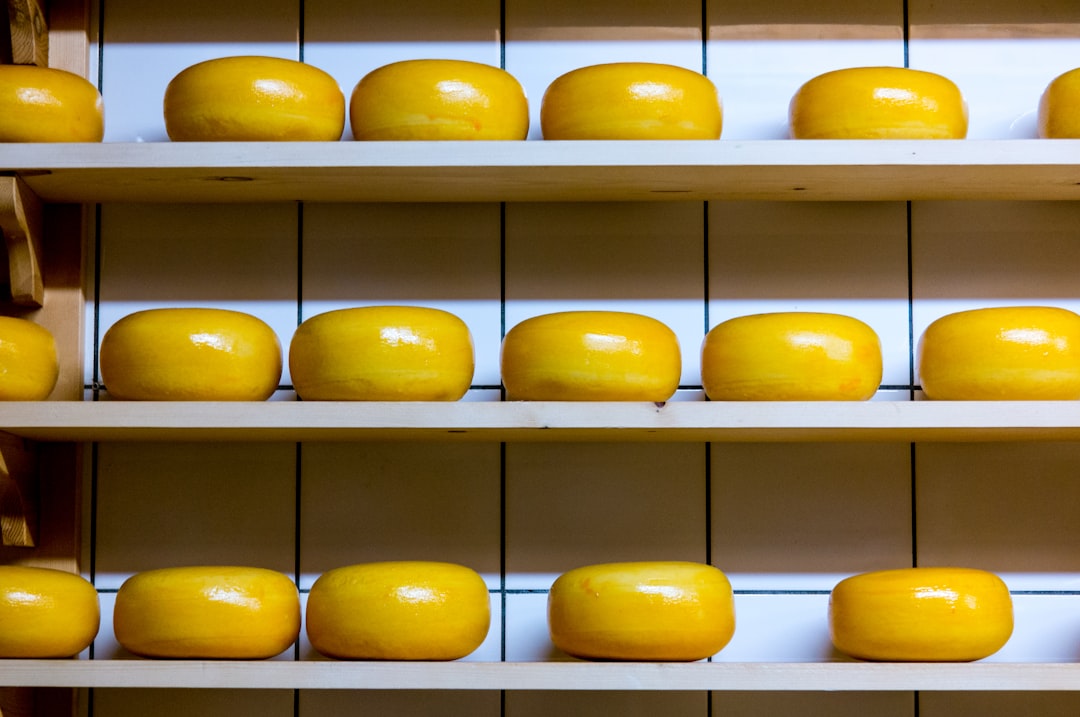
For an artisanal cheesemaker scaling distribution, the packaging is an extension of the aging room. A standard RSC (Regular Slotted Container) can suffocate a wheel, trapping moisture and fostering mold long before it reaches a specialty grocer's cheese counter. The challenge is twofold: design a corrugated box that facilitates the precise air circulation needed for continued affinage (the aging process) while also providing robust protection for palletized shipping.
This is where wholesale packaging engineering separates itself from commodity box supply. At Rox Packaging, we work with California cheesemakers to develop ventilated corrugated solutions that are as deliberate as their recipes. Based on 25 years of packaging expertise from our Fullerton facility, we approach this as a technical problem of material science, structural design, and logistics. The goal is a box that acts as a controlled microclimate, not just a container.
1. The Core Challenge: Managing Moisture and Airflow
During aging, cheese undergoes complex biochemical processes, releasing moisture (whey) and carbon dioxide. A sealed environment creates a humidity pocket, leading to surface mold, rind slippage, or undesirable bacterial growth. Conversely, excessive airflow can dry out the cheese, causing cracking and halting enzymatic activity.
The packaging must strike a balance. It needs to allow for passive, consistent gas exchange without compromising the box's stacking strength (to prevent column crush on a pallet) or allowing contaminants in. For shipping, the box must also resist ambient humidity changes during transit and withstand compression forces from other palletized goods.
2. Flute Profiles and Board Combinations: The Structural Foundation
The corrugated medium, the fluted layer, is the first determinant of strength and breathability. Not all flutes are created equal.
| Flute Designation | Flutes per Foot | Thickness (Approx.) | Typical Use in Dairy Packaging |
|---|---|---|---|
| B-Flute | ~47 | 1/8" | Excellent for high print quality on retail cartons. Provides good puncture resistance for pre-packaged cheese wedges. Less ideal for primary aging box structure. |
| C-Flute | ~39 | 5/32" | The most common all-purpose flute. Offers a strong balance of stacking strength (ECT) and cushioning. A good candidate for double-wall constructions for heavier wheels. |
| E-Flute | ~90 | 1/16" | Thinner, with a smooth surface for high-quality printing. Often used for premium folding cartons that hold waxed or vacuum-sealed cheese. Provides minimal breathability on its own. |
For a primary aging and shipping container for 10-20 lb wheels, a single-wall C-flute is often the starting point. For larger formats (40+ lb wheels) or demanding pallet dynamics, a double-wall board (like BC-flute or EB-flute) combines the crush resistance of a thicker flute with the print surface of a finer one. The key is that the flutes themselves create tiny channels for lateral air movement within the board walls, contributing to overall breathability.
3. Perforation Patterns: Engineering the Airflow
Strategic perforation is how we engineer precise airflow. It's not random holes, it's a calculated pattern based on:
- Cheese Mass and Moisture Output: A high-moisture fresh cheese requires more vent area than a hard, aged Parmesan.
- Box Orientation: Vents are typically placed on the vertical sides (panels) of the box, not the top and bottom, to promote vertical air chimney effects while preventing direct debris entry during handling.
- Strength Preservation: Perforations remove material, which reduces the board's Edge Crush Test (ECT) rating. Patterns must be designed to minimize impact on critical load-bearing corners and edges.
Common patterns include:
- Slot Perforations: 1-2 inch horizontal slots. Efficient for air exchange, easier on die-cutting tools.
- Round Hole Perforations: Arrays of 1/4" to 1/2" diameter holes. Provides a more dispersed airflow.
- Louvered Vents: Angled punches that allow air flow while providing a barrier against direct splashing or insect ingress. More complex to tool.
A technical spec sheet for a ventilated cheese box should detail the total vent area as a percentage of the total side panel area. A typical range for affinage boxes is 5-15%.
When requesting a quote for ventilated cheese boxes, specify: cheese type/weight, current aging room humidity, and target shelf life post-packaging.
4. Material Treatments and Coatings for Moisture Resistance
Corrugated is inherently susceptible to moisture, which weakens its fiber bonds. For environments with high humidity or to protect against condensation during refrigerated transport, treatments are necessary.
- Wax Alternatives (Polyethylene or PET Coatings): A light extrusion coating or lamination can provide a moisture barrier while still allowing for strategic venting in untreated areas. This is different from total wax saturation (wet wax), which is overkill and eliminates breathability.
- Sizing Agents: Internal sizing added during the papermaking process can improve the linerboard's inherent water resistance without a surface coating.
- Food-Grade Inks and Adhesives: All materials must be suitable for indirect food contact. Soy-based inks and starch-based adhesives are standard in food-grade corrugated.
The trade-off is cost and complexity: coatings add a manufacturing step and material cost, but they can prevent catastrophic box failure and product loss. The decision matrix often depends on the length of the cold chain and whether boxes are stored directly on cooler floors.
5. Performance Testing: Beyond the Blueprint
Before committing to a full production run of 1,000+ units (our standard MOQ for offset-printed, custom engineered boxes), validation is crucial.
- Compression Test (BCT): Ensures the perforated box can still bear the weight of a full pallet stack. A box for 12-lb wheels might need a minimum BCT of 800 lbs.
- Edge Crush Test (ECT): Measures the stacking strength of the corrugated board itself. A 32 ECT single-wall board is common, but a double-wall 48 ECT or higher may be required for heavy wheels or tall pallets.
- Mullen Burst Test: Less critical for pure stacking, but indicates general durability and puncture resistance.
- Real-World Conditioning: Placing prototype boxes with test products in a controlled aging environment for 2-4 weeks is the ultimate test for mold prevention and rind development.
We guide clients through these specifications on our products page, which details the performance characteristics of different corrugated grades.
6. Integration with Logistics and Branding
The engineered box must also function in the supply chain. Key considerations include:
- Pallet Optimization: Box dimensions must be designed to fit standard pallet footprints (48"x40") with minimal overhang, creating a stable, interlocked load.
- Printing for the Premium Market: Artisanal cheese is a brand story. High-quality flexographic printing can turn the shipping container into a point-of-purchase display, showcasing origin, awards, and pairing notes. This is where flute selection (E-flute for detail, C-flute for strength) intersects with marketing.
- Compatibility with Automation: If the cheesemaker uses case erectors, packers, or sealers, the box design (score lines, flap dimensions) must accommodate that machinery.
For smaller producers not yet at our 1,000-unit MOQ, our sister brand Build A Box Online offers short-run digital printing and no-MOQ options for market testing or limited releases.
Conclusion: Packaging as a Process Parameter
For the scaling artisanal cheesemaker, ventilated corrugated packaging should be viewed as a critical process parameter, akin to temperature and humidity control in the aging cave. The right box design mitigates loss, preserves quality, and extends market reach.
The variables, flute, board weight, perforation pattern, coating, are interconnected. A change to increase vent area may require upgrading to a higher ECT board to compensate for lost strength. This is the essence of packaging engineering: solving for multiple, sometimes competing, performance requirements.
As a California-based wholesale supplier, we partner with food producers across the state to navigate these trade-offs. The conversation starts with your specific cheese, process, and distribution goals. To begin the technical review and quoting process for a custom ventilated corrugated solution, submit your project details via our RFQ form. You can also call our packaging specialists at (888) 406-1610 to discuss your needs before submitting a formal request.