
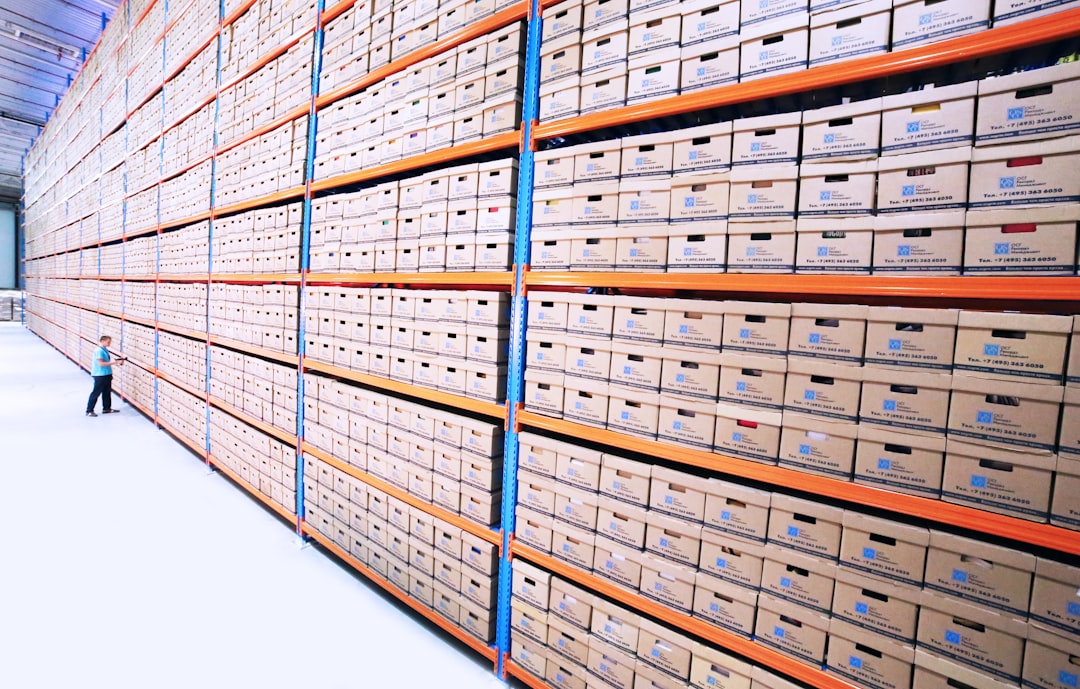
A sudden spike in warehouse humidity is more than an inconvenience. For procurement managers and plant operations leads responsible for shipping product, it’s a silent threat to your supply chain's integrity. In regions like California, where coastal fog can roll in or HVAC systems falter, relative humidity (RH) can quickly climb above 70-80%, directly attacking the structural core of your corrugated packaging.
Corrugated board is hydroscopic. It absorbs and releases moisture from the air, directly impacting its key performance metric: box compression strength (BCT). A week at 80% RH can reduce the compression strength of stored corrugated boxes by 40% or more. Shipping with compromised boxes risks catastrophic stack failures in transit, leading to product damage, rejected shipments, and eroded customer trust.
This protocol provides a clear, engineering-based path forward. It’s designed for operations professionals at CPG, food and beverage, beauty, and 3PL manufacturers who need to assess remaining stock, validate its usability, and precisely recalibrate specifications for the next production run to ensure pallet-scale shipments arrive intact.
1. The Science: How Humidity Compromises Corrugated Integrity
The strength of a corrugated box comes from the vertical flutes acting as miniature columns, and the linerboards providing sheer resistance. The primary adhesive in this structure is the hydrogen bonds within the cellulose fibers of the paper itself.
Moisture as a Plasticizer
When relative humidity increases, water molecules penetrate the cellulose fibers, breaking these hydrogen bonds. This acts as a plasticizer, making the fibers more flexible and less rigid. The board loses its stiffness, causing it to buckle under lower loads. The flutes can delaminate more easily, and the entire structure becomes prone to creep, meaning it will slowly deform under a constant load over time.
Quantifying the Loss
Research from the Fibre Box Association and ASTM standards (like D7030) shows a predictable, non-linear relationship between moisture content and compression strength. While the exact curve varies with board grade and flute structure, a general rule is critical for rapid assessment:
- At 50% RH (standard testing condition), board is at baseline strength.
- At 65% RH, BCT can drop by 15-20%.
- At 80% RH, BCT can drop by 40-50%.
- At 90% RH, the loss can exceed 60%.
This means a box rated for 600 lbs. BCT under standard conditions may only hold 360 lbs. after sustained exposure to 80% RH. If your pallet stacking calculations were based on the original spec, you are now significantly overloading your packages.
2. Immediate Assessment: Testing Your Compromised Stock
Before you scrap an entire warehouse pallet of boxes or risk a shipment, conduct a triage. Your goal is to determine if the stock is usable for its intended load, or if it must be downgraded to lighter-duty applications.
Visual and Tactile Inspection
First, perform a manual check. Look for:
- Warping or Waviness: A clear sign of uneven moisture absorption.
- Soft Edges: Press on the corners and edges of several boxes. They should resist deformation. A spongy feel indicates moisture saturation.
- Flute Delamination: Try to separate the liners from the fluted medium at a seam. Increased ease of separation is a red flag.
Simple Field Compression Test (Go/No-Go)
For a quick, non-destructive strength check, you can use a calibrated force gauge or even a controlled weight test. Mark a sample box from the suspect lot.
- Place the empty box on a level, solid floor.
- Carefully stack known weights (like other full, stable boxes of known weight) centrally on top.
- Load it to 60-70% of its original intended load capacity (not its rated BCT).
- Let it sit for 4-8 hours, simulating a short-term stack.
- Inspect for significant deformation, bowing, or buckling.
If the box shows critical deformation, the entire lot is likely compromised for its primary use.
When to Involve Your Supplier
If the stock is for a critical shipment or the visual/tactile signs are severe, contact your packaging partner. A technical supplier like Rox Packaging can often arrange for expedited testing of provided samples or cross-reference production data to model the expected strength loss. The fastest path to a resolution is to submit an RFQ via /quote.html with details of the incident and your current box specs for an engineering review.
3. Recalculating Specifications for the Next Production Run
Once you've managed the immediate crisis, you must engineer the replacement boxes to prevent a repeat. This involves adjusting the board combination to compensate for potential environmental exposure, not just the incident that already occurred.
Upgrading Board Grade
The most direct method is to increase the Edge Crush Test (ECT) rating of the corrugated board. ECT measures the fluting's resistance to crushing, a primary factor in BCT. If your compromised boxes were ECT 32, moving to ECT 44 or higher will build in a strength buffer.
| Original Spec (Pre-Humidity) | Suggested Compensated Spec | Approximate BCT Increase | Best For |
|---|---|---|---|
| 200# Mullen / ECT 26 | ECT 32 | +25-30% | Light-duty retail, poly bags |
| ECT 32 | ECT 44 | +35-40% | Common CPG, bundled goods |
| ECT 44 | ECT 55 | +25-30% | Dense food/beverage, hardware |
| 275# Mullen / ECT 44 | Double-Wall ECT 48 | +50-70% | Heavy industrial, automotive parts |
Optimizing Flute Profile and Board Combination
Flute size (A, B, C, E, F) affects cushioning, print surface, and stacking strength. For maximum compression recovery after a humidity risk:
- Consider a thicker flute profile: Moving from B-flute (1/8") to A-flute (3/16") increases vertical compression strength and column rigidity.
- Evaluate double-wall board: Combining two layers of fluting (e.g., BC or EB flute) dramatically increases rigidity and moisture resistance over single-wall, often providing the most cost-effective strength solution for heavy or high-stack shipments. Explore our full product lineup for standard double-wall options.
- Specify moisture-resistant additives: For environments where humidity is a chronic risk (e.g., food processing, coastal 3PLs), discuss options like internal sizing or coatings during the quoting process. These treatments add cost but can stabilize performance within a wider RH range.
4. Proactive Measures: Specifying for Environmental Resilience
Engineering your packaging for the environment it will pass through is a hallmark of mature supply chain management. Here’s how to build that foresight into your RFQs.
Define the Environmental Hazard
In your next packaging request, include more than dimensions and graphics. Specify the environmental challenge:
Product to be stored in inland warehouse, seasonal RH 50-80%. Required to hold 40 lb. product, palletized 12 high, for up to 14 days in a non-climate-controlled cross-dock.
This allows your packaging engineer to select materials and calculate safety factors accordingly. A partner with deep industry expertise, especially in food, beverage, and beauty where humidity is a constant, will know what questions to ask.
Factor in Storage Time and Stacking Load Duration
The longer a box is under load, the more creep becomes a factor, especially with elevated moisture. Your spec should account for total dwell time from palletization to final unstacking. A box that only needs to hold weight for 48 hours during transit can be spec'd differently than one sitting in a distribution center for three weeks.
Implement a Quality Control Checkpoint
Add a simple moisture check to your inbound packaging inspection. An inexpensive digital hygrometer can confirm the RH of your storage area. If received boxes feel damp or are stored in a high-humidity area (>65% RH), they should be moved to a conditioned space or given extra time to acclimate before use.
5. The Procurement and Ops Checklist Post-Incident
Use this action list to systematically respond to and prevent humidity-related packaging failures.
- Triage Current Stock: Perform visual/tactile inspection and field compression test on suspect lots. Segregate questionable boxes.
- Assess Usability: Can compromised boxes be used for a lighter, shorter-term application internally to avoid total waste?
- Engage Your Supplier: Contact your packaging partner with the details. Provide original box specs, description of the humidity event, and any test results. Submit a formal RFQ for replacement stock.
- Recalculate the Spec: Work with your supplier to upgrade ECT rating, adjust flute profile, or consider double-wall construction for the next run. Discuss moisture-resistant treatments if needed.
- Update Internal Spec Sheets: Document the new, compensated specification as the standard for that product or shipping lane.
- Mitigate Storage Risk: Audit warehouse humidity controls. Designate a dry storage area for packaging materials. Implement first-in, first-out (FIFO) inventory management for corrugated.
- Communicate: Inform logistics and warehouse teams of the findings and the new handling or storage protocols for packaging.
6. When Low Volume is the Constraint
The above protocol assumes pallet-scale economics, where adjusting board grade for a run of 1,000+ units is feasible. For prototyping, short runs, or urgent small-volume needs where a 1,000-unit MOQ is a barrier, our sister brand, Build A Box Online, provides a solution. They specialize in no-minimum-order-quantity corrugated boxes, useful for testing a new compensated spec in real-world conditions before committing to a full production run with your wholesale supplier.
For California manufacturers, the goal is resilient packaging that performs from the production line to the end customer. By understanding the material science of corrugated, implementing rigorous assessment, and engineering specs with environmental hazards in mind, you transform a vulnerability into a controlled variable. The result is fewer in-transit failures, less waste, and a more predictable supply chain.
If you're reassessing your packaging specifications following an environmental challenge or simply want to audit your current stock's resilience, start with an engineering review. You can reach our technical team at (888) 406-1610 or, for a detailed specification analysis and quote, submit an RFQ via /quote.html.